Seeds of Promise, Visions of Veggies.
My seeds arrived in the mail the same day the election was called. The sad part is we have new seeds every year and we have almost matched that with elections, 4 in 7 years and that doesn’t include provincial or municipal. If we could only weed out the nasty critters in the political landscape the way we do in our gardens and cast out those deep-rooted nutrient-sucking parasites. Then compost them into something useful, our country would then bloom and produce like our gardens and become something we could once again be proud of. Remember how we feel after weeding the garden? Loathing to do it but once the task is finished our sore backs and weary bodies are blessed with the promise of future abundance. Some how elections just don’t have the same effect, headaches and high blood pressure from endless TV debates and reports. Promises we know will be broken however sincerely given as soon as the election is won. Worse yet the utter helplessness of it all knowing who ever gets elected, taxes will go up, services will go down, and very little will change except the talking heads and the colour of the banners.
Remember the old saying, “ you can keep some of the people happy all of the time, and all of the people happy some of the time, but not all of the people happy all of the time”. Oh Canada, many of us question the need and the reason of voting when little seems to change, but if you don’t do it you can’t gripe afterwards. So get out and vote so you can hold you head high and complain later!
On a lighter note and still on elections go to the CBC website and try the Vote Compass, it’s a series of questions that show where you are compared to the five main political parties. The result is on a four axial graph much like a large crosshairs and much to my surprise (tongue firmly in cheek) I discovered I was equal distance from all major parties, about as far from them all as could be physically possible on this type of graph. I took great pleasure in printing the result off, as I shall frame it as proof positive of my Politically incorrect curmudgeonly ways. As to whom I should vote for it would appear I should form a new party for myself and the many other millions of disenfranchised voters across the country. With yet another party to choose from I doubt this nation would ever see a majority government again!
Now to the more important news, seeds, dirt and critters! The land is starting to stir with the warmer temperatures and the city farmers are busy planting in their greenhouses, or greasing up the machinery to go to the field as soon as it is dry enough. Newborn calves can be seen in barnyards and fields, some already several weeks old. Our goats have finished kidding and Xerox our new Billy goat did a great job of producing many copies of himself, half boys and half girls. The sheep will start lambing soon, around the first week in April, apart from one who visited one of our black rams before the breeding season and who has already produced a fine set of twins. The orchardists have been busy pruning, some thing that is still on my to do list, and the bee keepers are watching their hives and wishing for sunnier warm weather so they can stop feeding the bees. It is still too early to be out cultivating or rotor tilling but it is always interesting to see who can get on their fields first. Most of us are now armed with seed and I saw many of you at Seedy Saturday. I wish you ever success over the next few weeks getting dirt under your fingers and planting promises to fill your dinner plates.
On 16th April noon till 5.00pm Harmonious Homestead and ewe will host their 3rd annual Knee Deep in Spring event so folks can see the new born lambs, goat kids, piglets, chicks and baby rabbits. It’s a good chance to chase away the winter blues and celebrate spring and a fresh start. Politicians are most welcome so long as they kiss a piglet for the photo op!
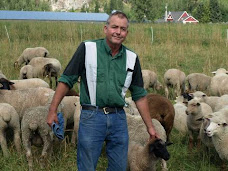
Rob Fensom farms in the city at Harmonious Homestead and ewe.
Saturday, April 2, 2011


Saturday, March 5, 2011
Our Trip to Panama, I now know why I hate winter!
Tropical Travels.
It’s the last week of February as I write this and the temperatures are quite seasonal, for Winnipeg! The shock to my system is even worse as we have recently returned from Panama where summer reigns eternal. My wife and I had a holiday 3 years after our last one. This does not sound bad, but when you realize that was our first one in 28 years and to follow it so soon with another one is a major accomplishment for my wife. I had to be dragged kicking and screaming from the ranch so close to my last departure 3 years before, hats off to her.
The above is somewhat tongue in cheek, though there was a time when I was that stubborn. These days the promise of a 30 degree Celsius jump in temperature and 20lbs less clothing on to keep warm is all I need to activate the traveling bug.
Panama is amazing and not at all like I imagined. With a canal between two large oceans I expected a flat swamp laden land, with endless jungle and every one living on a costal strip. Guess what, they have mountains and plenty of them, which is a good thing as they grow the best coffee I have ever tasted. Lots of ranch land, thousands of cattle, year round grazing and no hay to make or feed. I had to pinch myself to make sure I was not already in heaven!
In a country of 3 million people and a year round growing season agriculture plays a big role, with beef, pork, and chicken in the meat department, sugar cane, pineapples, bananas, coffee, papaya, mangoes and many vegetables in the field crops. The cattle seemed to be in the hilly regions where bush and terrain made cropping difficult. Most were cow calf operations, their calves are moved to lower greener pastures for finishing. We noticed fattening cattle on lush rotationally grazed pastures in the cropland areas and with no grain being grown I assumed all beef is grass fed. I only saw a few sheep and the only place I saw goats were on the large Indigenous reserves. Many of the ranches in the hills and bushier regions could have used goats to keep the scrub under control and that would improve the pastures for the cattle. (Maybe they need a Pasture consultant, a white-collar job and no winter, score!)
After all this about the production, lets talk consumption. Most higher end restaurants cook dishes from all over the world, and we wanted to eat Panamanian in Panama not Thai, Japanese or American. So we hunted out the Cantinas, which were busy serving locals and were treated to authentic, tasty and cheap meals. The best we found was on the main street in Bouquete a coffee growing town in the mountains. ‘Serasone’ had a large smorgasbord with at least 8 different meats, many different rice’s and vegetables, plantain being my personal favorite. Also several different deserts and cakes. All this, for only $5 per person. One of our fellow travelers received seniors rate and it was $1.50!
Panamanian food is flavourfull but not hot or spicy, in fact the only time I smelt garlic was at the airport on the breath of newly arriving Gringos.
When we were near or on the coast fish was plentiful and was a treat for us after lamb, pork and chicken from our farm. I had to try a steak and found steaks are cut thin and cooked fast to seal in the flavour, actually most meat is grilled or fried with sauces added afterwards. In those temperatures who needs to sweat over a hot stove, and eat roasts and stews. The grass fed steaks were great along with the fish, squid, octopus, crab and lobster.
We spent time on beaches and palm treed desert islands; snorkeled corral reefs and shipwrecks the usual tourist stuff so I won’t bore you. The neat thing to see, and one of our reasons for going was the Panama Canal. We had both learnt about in our geography lessons at high school, so a trip to the Miraflores Locks was one of the highlights of our trip. Luck was with us as the cruise ship “Queen Elizabeth” of the Cunard line from London England was passing through as we were there. The ships are towed through the locks by electrically powered trains, which act as brakes as well as providing forward motion. There was only two feet either side of the ship to spare, so accuracy is paramount. It takes about 8 hours to go from one ocean to the other and at any one time there are 40 to 50 boats waiting at either end to use the system. It runs 24 seven, every day of the year. The cruise ship paid $300,000 for the privilege, and the large container ships stacked high with truck sized boxes pays a cool $1 million for an 8 hour, 54 mile trip. What’s more, they won’t let you enter the system until your cheque has cleared. Who needs to deal in drugs when you have a canal!
Folks have asked me if I felt safe there and was security a concern. Well the police are all heavily armed, many with shotguns and machine guns, they are friendly and helpful and there seems no shortage of them. There was no sign of speed cop’s, the potholes do their job for free. The rest of the locals are very friendly and not armed, so to be honest I have felt more nervous on Canadian city streets at times than ever I did in Panama City or else where in Panama.
So I would give Panama a big “thumbs up”, go and check it out. I know two of you have as while walking around a coffee plantation in Bouquete I met a couple from Sorrento. What’s more we bumped into them in Old Panama City a week later, 400kms from the coffee farm. Small world or what!
Rob Fensom calls Harmonious Homestead and ewe home and farms in the city.
It’s the last week of February as I write this and the temperatures are quite seasonal, for Winnipeg! The shock to my system is even worse as we have recently returned from Panama where summer reigns eternal. My wife and I had a holiday 3 years after our last one. This does not sound bad, but when you realize that was our first one in 28 years and to follow it so soon with another one is a major accomplishment for my wife. I had to be dragged kicking and screaming from the ranch so close to my last departure 3 years before, hats off to her.
The above is somewhat tongue in cheek, though there was a time when I was that stubborn. These days the promise of a 30 degree Celsius jump in temperature and 20lbs less clothing on to keep warm is all I need to activate the traveling bug.
Panama is amazing and not at all like I imagined. With a canal between two large oceans I expected a flat swamp laden land, with endless jungle and every one living on a costal strip. Guess what, they have mountains and plenty of them, which is a good thing as they grow the best coffee I have ever tasted. Lots of ranch land, thousands of cattle, year round grazing and no hay to make or feed. I had to pinch myself to make sure I was not already in heaven!
In a country of 3 million people and a year round growing season agriculture plays a big role, with beef, pork, and chicken in the meat department, sugar cane, pineapples, bananas, coffee, papaya, mangoes and many vegetables in the field crops. The cattle seemed to be in the hilly regions where bush and terrain made cropping difficult. Most were cow calf operations, their calves are moved to lower greener pastures for finishing. We noticed fattening cattle on lush rotationally grazed pastures in the cropland areas and with no grain being grown I assumed all beef is grass fed. I only saw a few sheep and the only place I saw goats were on the large Indigenous reserves. Many of the ranches in the hills and bushier regions could have used goats to keep the scrub under control and that would improve the pastures for the cattle. (Maybe they need a Pasture consultant, a white-collar job and no winter, score!)
After all this about the production, lets talk consumption. Most higher end restaurants cook dishes from all over the world, and we wanted to eat Panamanian in Panama not Thai, Japanese or American. So we hunted out the Cantinas, which were busy serving locals and were treated to authentic, tasty and cheap meals. The best we found was on the main street in Bouquete a coffee growing town in the mountains. ‘Serasone’ had a large smorgasbord with at least 8 different meats, many different rice’s and vegetables, plantain being my personal favorite. Also several different deserts and cakes. All this, for only $5 per person. One of our fellow travelers received seniors rate and it was $1.50!
Panamanian food is flavourfull but not hot or spicy, in fact the only time I smelt garlic was at the airport on the breath of newly arriving Gringos.
When we were near or on the coast fish was plentiful and was a treat for us after lamb, pork and chicken from our farm. I had to try a steak and found steaks are cut thin and cooked fast to seal in the flavour, actually most meat is grilled or fried with sauces added afterwards. In those temperatures who needs to sweat over a hot stove, and eat roasts and stews. The grass fed steaks were great along with the fish, squid, octopus, crab and lobster.
We spent time on beaches and palm treed desert islands; snorkeled corral reefs and shipwrecks the usual tourist stuff so I won’t bore you. The neat thing to see, and one of our reasons for going was the Panama Canal. We had both learnt about in our geography lessons at high school, so a trip to the Miraflores Locks was one of the highlights of our trip. Luck was with us as the cruise ship “Queen Elizabeth” of the Cunard line from London England was passing through as we were there. The ships are towed through the locks by electrically powered trains, which act as brakes as well as providing forward motion. There was only two feet either side of the ship to spare, so accuracy is paramount. It takes about 8 hours to go from one ocean to the other and at any one time there are 40 to 50 boats waiting at either end to use the system. It runs 24 seven, every day of the year. The cruise ship paid $300,000 for the privilege, and the large container ships stacked high with truck sized boxes pays a cool $1 million for an 8 hour, 54 mile trip. What’s more, they won’t let you enter the system until your cheque has cleared. Who needs to deal in drugs when you have a canal!
Folks have asked me if I felt safe there and was security a concern. Well the police are all heavily armed, many with shotguns and machine guns, they are friendly and helpful and there seems no shortage of them. There was no sign of speed cop’s, the potholes do their job for free. The rest of the locals are very friendly and not armed, so to be honest I have felt more nervous on Canadian city streets at times than ever I did in Panama City or else where in Panama.
So I would give Panama a big “thumbs up”, go and check it out. I know two of you have as while walking around a coffee plantation in Bouquete I met a couple from Sorrento. What’s more we bumped into them in Old Panama City a week later, 400kms from the coffee farm. Small world or what!
Rob Fensom calls Harmonious Homestead and ewe home and farms in the city.
Saturday, January 29, 2011
My January Column in the Friday AM.
Endings and Beginnings.
Writing this so close to the calendar year change I will do my best to avoid boring recaps of the past year and offering my predictions for 2011 as seems so common among many writers in both print and electronic media. Here on the farm things not only change with the seasons but also with the economy. Every one has to eat, so every one is a potential customer for a farmer selling to a consumer. This is a new concept for me and constitutes one of the biggest changes I have encountered since coming to the metropolis of Salmon Arm.
“Salmon Arm, a metropolis” you say. Well, to a rancher from the Manitoba Prairie who drove 30 miles to pick up the mail this area sure has a lot of people, and the mailbox is right by my pasture just a short walk from the barn. The down side is I can’t go to the coffee shop to catch up on gossip and cattle prices while picking up the latest issue of the “Western Producer” and the inevitable bills. Every one there and in most of the Canadian Prairies were commodity farmers and ranchers. We had one pay cheque a year when we shipped a couple of semi loads of calves and never met or spoke to the folks who ate our product. Life was simple, but with out the feedback or interaction with our customers, I now realize it was dull and somewhat boring; with out knowing it, I needed a challenge.
We arrived here nearly six years ago and change it seems was the name of the game. We started out commodity farming, cow/calf, grazing stockers (yearlings) and lately sheep. With our fertile irrigated valley bottomland producing 4 times per acre more than our land on the old ranch I felt the smaller land base would work. Then economics reared its ugly head in the form of higher costs and lower livestock prices. It was time to jump into the “white water” of value added and farm diversification, get wet, cold and scared. A 180 degree turn from grass chewing rancher to rural businessman, who says you can’t teach old dogs new tricks.
Learning curves are always tough, sometimes brutal and always full of surprises, some good, some not so. Rather than jump in head first, we stepped into the water gently just up to our knees to check it out. Last year saw us grow a small market garden of mixed vegetables to sell at the farm gate and in the Farmers Market. We produced and sold pasture-raised meats, chicken, pork, lamb and rabbit. Well boy oh boy, did we have fun, sure it was hard work and long hours, with its share of problems, but the interaction with our customers was worth it. I am not sure who learnt more, them or us. I could have ended up one of those crusty old ranchers who preferred cattle to people, and sits in the coffee shop complaining about the weather, the government and cattle prices. Instead I now get to sell my produce to local consumers and share and talk with them and their children about how the food is grown, why its good for them and answer there varied questions about our operation. Farming and ranching is fun again, and now I can share my passion not only with my critters but also my customers.
Here at the threshold of 2011 I will make no predictions for me, or you, but I can safely say our farming operation will grow, as local raised and grown food seems very much on the minds of folks in the Shuswap. We will have a new outlet on our farm with the moving of Mount Ida hall to our farmyard. This will give us a farm store and meeting place, (maybe I can sit in the corner drink coffee and complain about the government and cattle prices as a tourist attraction, or may be not says the wife!) We will also start several new product lines, pasture raised beef and eggs and also grow more early sweet corn and potatoes. I sold so many potatoes we have none for our selves and are reduced to buying them in the store, I have been given strict instructions not to let this happen again by you know who!
The weather has been kind so far and the wood pile is not going down very fast which is a treat as I don’t spend as long being shaken to pieces by my trusty husky chain saw. On the farm it also means with the warmer weather less hay is consumed which is always a bonus. Things have calmed down and we can now plan for next year. My wife, the organizer of our team has had me install two large planning calendars, one for the year and one for the month on our office wall. All notations are colour coded for ease of recognition along with appointment times and destinations. All I have to do is decipher it and be at the right place at the right time, and I thought last years learning curve was tough!
Writing this so close to the calendar year change I will do my best to avoid boring recaps of the past year and offering my predictions for 2011 as seems so common among many writers in both print and electronic media. Here on the farm things not only change with the seasons but also with the economy. Every one has to eat, so every one is a potential customer for a farmer selling to a consumer. This is a new concept for me and constitutes one of the biggest changes I have encountered since coming to the metropolis of Salmon Arm.
“Salmon Arm, a metropolis” you say. Well, to a rancher from the Manitoba Prairie who drove 30 miles to pick up the mail this area sure has a lot of people, and the mailbox is right by my pasture just a short walk from the barn. The down side is I can’t go to the coffee shop to catch up on gossip and cattle prices while picking up the latest issue of the “Western Producer” and the inevitable bills. Every one there and in most of the Canadian Prairies were commodity farmers and ranchers. We had one pay cheque a year when we shipped a couple of semi loads of calves and never met or spoke to the folks who ate our product. Life was simple, but with out the feedback or interaction with our customers, I now realize it was dull and somewhat boring; with out knowing it, I needed a challenge.
We arrived here nearly six years ago and change it seems was the name of the game. We started out commodity farming, cow/calf, grazing stockers (yearlings) and lately sheep. With our fertile irrigated valley bottomland producing 4 times per acre more than our land on the old ranch I felt the smaller land base would work. Then economics reared its ugly head in the form of higher costs and lower livestock prices. It was time to jump into the “white water” of value added and farm diversification, get wet, cold and scared. A 180 degree turn from grass chewing rancher to rural businessman, who says you can’t teach old dogs new tricks.
Learning curves are always tough, sometimes brutal and always full of surprises, some good, some not so. Rather than jump in head first, we stepped into the water gently just up to our knees to check it out. Last year saw us grow a small market garden of mixed vegetables to sell at the farm gate and in the Farmers Market. We produced and sold pasture-raised meats, chicken, pork, lamb and rabbit. Well boy oh boy, did we have fun, sure it was hard work and long hours, with its share of problems, but the interaction with our customers was worth it. I am not sure who learnt more, them or us. I could have ended up one of those crusty old ranchers who preferred cattle to people, and sits in the coffee shop complaining about the weather, the government and cattle prices. Instead I now get to sell my produce to local consumers and share and talk with them and their children about how the food is grown, why its good for them and answer there varied questions about our operation. Farming and ranching is fun again, and now I can share my passion not only with my critters but also my customers.
Here at the threshold of 2011 I will make no predictions for me, or you, but I can safely say our farming operation will grow, as local raised and grown food seems very much on the minds of folks in the Shuswap. We will have a new outlet on our farm with the moving of Mount Ida hall to our farmyard. This will give us a farm store and meeting place, (maybe I can sit in the corner drink coffee and complain about the government and cattle prices as a tourist attraction, or may be not says the wife!) We will also start several new product lines, pasture raised beef and eggs and also grow more early sweet corn and potatoes. I sold so many potatoes we have none for our selves and are reduced to buying them in the store, I have been given strict instructions not to let this happen again by you know who!
The weather has been kind so far and the wood pile is not going down very fast which is a treat as I don’t spend as long being shaken to pieces by my trusty husky chain saw. On the farm it also means with the warmer weather less hay is consumed which is always a bonus. Things have calmed down and we can now plan for next year. My wife, the organizer of our team has had me install two large planning calendars, one for the year and one for the month on our office wall. All notations are colour coded for ease of recognition along with appointment times and destinations. All I have to do is decipher it and be at the right place at the right time, and I thought last years learning curve was tough!
Tuesday, December 21, 2010
Wholes and Holes and Holism
Over the last few days I have been following the Globe and Mail’s food and agriculture debate. Rolling out of bed and getting all hot under the collar reading a bunch of opinions on my livelihood and how it is perceived by so called experts is just what I need to start my day. Yeah right! I posted comments to try to make me feel better, but ended up feeling much like a prophet of old, “a voice crying in the wilderness”. One though, managed to hit the mark, as it was 5th of 194 comments. I felt there was hope yet in this world full of corn fructose syrup, artificial flavorings and “Twinkie bars”.
The trouble is we are in the age of “experts” were those with knowledge on very specific topics are able to share their findings and more often their opinion, and it is swallowed hook, line and sinker by media, reader and viewer with out question. Science and knowledge has become very specialized and compartmentalized with very little over lap between areas. This in turn creates misunderstandings and conflicts between the different fields, experts and scientists theories become more important than the truth of the matter. Then add in the needed profits for the corporations who are funding the research and you have the narrow minded, blinkers on, vision of where we are today.
The “Big picture viewpoint”, or Holistic thinking seems to be a thing of the past. Sadly this leads to Common Sense becoming an endangered species and Wisdom a thing only found in classic books. South African statesman-scholar Jan Christian Smuts coined the word holism (from the Greek holos) in the 1920s in his book ‘Holism and Evolution’. He came to understand that the world was not bits and pieces of stuff, but flexible changing patterns. He states “If you take patterns as the ultimate structure of the world, it is arrangements and not stuff that make up the world.” Thus every thing is connected and dependent on every thing else. We need to look at the big picture before making big or little decisions.
This then brings me back to the Globe and Mail debate. Containing lots of facts and opinions from many experts and journalists, with each article and video clip dealing with specific items of the food industry. The best though was complaining that many Canadian farmers were too small to compete and too many were lifestyle farmers instead of commodity producers. Over 50% of the beef in this country comes from herds of 100 cows or less, and as the powers that be say it takes 400- 500 cows for a farm to be viable, it means 50% of our beef industry is supplied by hobby/small farmers and is subsidized by farmers wives working off farm to keep the farm afloat. (Makes you wonder who is subsidizing whom?) You don’t see that in the news, but the statistics with Stats Canada bear it out. The same is true of the sheep industry and often times the grain industry. Why the Globe and mail feels these Farmers should become obsolete is beyond me. With only half the cattle most killing plants in Canada would shut down, as they would be no longer viable. This is part of the big picture; looking at all farms not just the ones an expert thinks is viable, the holistic view we talked of earlier. To look at the even bigger picture, view the rest of the world. 75% of the world eats food from farms 20 acres or less, thank goodness the economists are not closing those farmers down for being too small! As Yoda from Star Wars said, “Size matters not”. Small farmers all over the world are feeding people and here in Canada they are producing a good portion of our food and in some cases adding a large portion to the export market. At the same time most qualify for very little or none of the subsidies that are available, and most subsidize the system by working off farm for their own income. No one from the Globe and Mail mentions that good deal for the folks in Canada.
There were however some good points made in a couple of the video clips. The latest figure for the average family has it that they spend 9% of their income on food and that includes eating out! Which could mean that many families only spend 5-7% of their income on groceries, and then they have the cheek to complain about the cost of food. Many pay more HST per month than for food. By comparison folks in Moscow Russia spend 50% of their wages on food and that does not include eating out. Even if you buy organic and pay a premium for quality food you are still only spending 10-12% on food items, an absolute bargain compared to the rest of the world.
My favorite quote and a sobering thought was from a lady chef who pointed out that “we eat our future”. What we put in our mouths becomes us in the future, so we best pay attention to our food and where it comes from. If folks looked at their food in this manner every time they raised a fork to their mouth I imagine there would be some changes demanded by consumers. Small Farmers generally do a better job of caring for the soil and its fertility and fertile soil makes nutrient dense food and therefore healthier people. This is never more poignantly explained than at a funeral by the grave with the words “ashes to ashes, dust to dust”. A harsh reminder of the fact we are really made up of the same stuff as the soil, therefore, plants, animals and ourselves are just different arrangements of the same stuff, holistically speaking.
A Merry Christmas to all readers and I challenge you to see how “close” you can keep your Christmas dinner, mileage wise that is. Mine will be local as it will be grown by myself, but I will have to admit I will let the side down with Bushmills Irish whiskey and some nice South African port!
Rob Fensom farms in the city at Harmonious Homestead and ewe.
Over the last few days I have been following the Globe and Mail’s food and agriculture debate. Rolling out of bed and getting all hot under the collar reading a bunch of opinions on my livelihood and how it is perceived by so called experts is just what I need to start my day. Yeah right! I posted comments to try to make me feel better, but ended up feeling much like a prophet of old, “a voice crying in the wilderness”. One though, managed to hit the mark, as it was 5th of 194 comments. I felt there was hope yet in this world full of corn fructose syrup, artificial flavorings and “Twinkie bars”.
The trouble is we are in the age of “experts” were those with knowledge on very specific topics are able to share their findings and more often their opinion, and it is swallowed hook, line and sinker by media, reader and viewer with out question. Science and knowledge has become very specialized and compartmentalized with very little over lap between areas. This in turn creates misunderstandings and conflicts between the different fields, experts and scientists theories become more important than the truth of the matter. Then add in the needed profits for the corporations who are funding the research and you have the narrow minded, blinkers on, vision of where we are today.
The “Big picture viewpoint”, or Holistic thinking seems to be a thing of the past. Sadly this leads to Common Sense becoming an endangered species and Wisdom a thing only found in classic books. South African statesman-scholar Jan Christian Smuts coined the word holism (from the Greek holos) in the 1920s in his book ‘Holism and Evolution’. He came to understand that the world was not bits and pieces of stuff, but flexible changing patterns. He states “If you take patterns as the ultimate structure of the world, it is arrangements and not stuff that make up the world.” Thus every thing is connected and dependent on every thing else. We need to look at the big picture before making big or little decisions.
This then brings me back to the Globe and Mail debate. Containing lots of facts and opinions from many experts and journalists, with each article and video clip dealing with specific items of the food industry. The best though was complaining that many Canadian farmers were too small to compete and too many were lifestyle farmers instead of commodity producers. Over 50% of the beef in this country comes from herds of 100 cows or less, and as the powers that be say it takes 400- 500 cows for a farm to be viable, it means 50% of our beef industry is supplied by hobby/small farmers and is subsidized by farmers wives working off farm to keep the farm afloat. (Makes you wonder who is subsidizing whom?) You don’t see that in the news, but the statistics with Stats Canada bear it out. The same is true of the sheep industry and often times the grain industry. Why the Globe and mail feels these Farmers should become obsolete is beyond me. With only half the cattle most killing plants in Canada would shut down, as they would be no longer viable. This is part of the big picture; looking at all farms not just the ones an expert thinks is viable, the holistic view we talked of earlier. To look at the even bigger picture, view the rest of the world. 75% of the world eats food from farms 20 acres or less, thank goodness the economists are not closing those farmers down for being too small! As Yoda from Star Wars said, “Size matters not”. Small farmers all over the world are feeding people and here in Canada they are producing a good portion of our food and in some cases adding a large portion to the export market. At the same time most qualify for very little or none of the subsidies that are available, and most subsidize the system by working off farm for their own income. No one from the Globe and Mail mentions that good deal for the folks in Canada.
There were however some good points made in a couple of the video clips. The latest figure for the average family has it that they spend 9% of their income on food and that includes eating out! Which could mean that many families only spend 5-7% of their income on groceries, and then they have the cheek to complain about the cost of food. Many pay more HST per month than for food. By comparison folks in Moscow Russia spend 50% of their wages on food and that does not include eating out. Even if you buy organic and pay a premium for quality food you are still only spending 10-12% on food items, an absolute bargain compared to the rest of the world.
My favorite quote and a sobering thought was from a lady chef who pointed out that “we eat our future”. What we put in our mouths becomes us in the future, so we best pay attention to our food and where it comes from. If folks looked at their food in this manner every time they raised a fork to their mouth I imagine there would be some changes demanded by consumers. Small Farmers generally do a better job of caring for the soil and its fertility and fertile soil makes nutrient dense food and therefore healthier people. This is never more poignantly explained than at a funeral by the grave with the words “ashes to ashes, dust to dust”. A harsh reminder of the fact we are really made up of the same stuff as the soil, therefore, plants, animals and ourselves are just different arrangements of the same stuff, holistically speaking.
A Merry Christmas to all readers and I challenge you to see how “close” you can keep your Christmas dinner, mileage wise that is. Mine will be local as it will be grown by myself, but I will have to admit I will let the side down with Bushmills Irish whiskey and some nice South African port!
Rob Fensom farms in the city at Harmonious Homestead and ewe.
Farmers opinions make national paper website.
Below are a couple of my comments to The Globe and Mail, Canada's leading national newspaper. They had the cheek to do a week long series on food and agriculture by so called experts, most of whom have never worked for their "Daily Bread" much less know how to grow it!
Comments from the floor
• Most recommended Most recent Oldest first
1-20 of 98 comments
« First‹ Prev12345Next ›Last »
rancherrob wrote:
Dear Sir, I have been ranching/farming man and boy for 40 plus year. I have farmed organically ( the worlds term, not mine) and have worked within the bounds of the natural order, building soil and organic mater thus increasing my lands fertility and real worth over time and at the same time produced healthy crops and livestock to feed mankind.Modern agriculture revolves around an annual ledger so to keep banks and bean counters happy most farmers have turned to science and industrial farming practices. This works in the short term, but over time depletes that other bank account, the soils fertility. Poor soil produces low yields and worse, stressed crops or livestock which become diseased easier, causing the need for more inputs, chemical and medicinal, an expensive, harsh cycle. We humans are always after the quick fix, we lack vision but most of all understanding and patience.When we all accept we are part of nature and this planet and not the ones in control of it we will see we can feed and cloth ourselves with out all the chemical and scientific intervention deemed so important by none other than those that make profit from supplying them.
My comment on 1st November to opinion in Globe and Mail calling for the scraping of dairy and chicken quotas, by ‘wealthy bureaucrat’ Ray McLaren.
rancherrob
9:48 AM on November 1, 2010
As a red meat producer in this country for 25 years ( beef and lamb) it never stops amazing me how many 'experts' know so much about how farmers and ranchers could do better for them selves and the public by adopting free market ways. This while they have steady pay cheques and a good pension to collect. These experts have never had to make a living and feed their family by growing food. We are now getting the same price per pound for animals that we were 20 years ago, then by the time you factor in inflation we are getting half what we were 20 years ago. In fact Belize a young country in Central America is getting the same price we are for lambs and beef cattle with a third the production costs with year round grass and no winter. The free market farmers in this country are subsidizing your lunch Mr McLaren. We can all live with out cheap imported goods from factories, but food, much like water and oxygen is essential. Remember if you eat you are involved in Agriculture, so while you eat your meat today remember some one raised it for you who does not have an index linked salary or pension plan and would be glad of the chance to have a living wage supplied by the market place like the dairy and egg producers.
Comments from the floor
• Most recommended Most recent Oldest first
1-20 of 98 comments
« First‹ Prev12345Next ›Last »
rancherrob wrote:
Dear Sir, I have been ranching/farming man and boy for 40 plus year. I have farmed organically ( the worlds term, not mine) and have worked within the bounds of the natural order, building soil and organic mater thus increasing my lands fertility and real worth over time and at the same time produced healthy crops and livestock to feed mankind.Modern agriculture revolves around an annual ledger so to keep banks and bean counters happy most farmers have turned to science and industrial farming practices. This works in the short term, but over time depletes that other bank account, the soils fertility. Poor soil produces low yields and worse, stressed crops or livestock which become diseased easier, causing the need for more inputs, chemical and medicinal, an expensive, harsh cycle. We humans are always after the quick fix, we lack vision but most of all understanding and patience.When we all accept we are part of nature and this planet and not the ones in control of it we will see we can feed and cloth ourselves with out all the chemical and scientific intervention deemed so important by none other than those that make profit from supplying them.
My comment on 1st November to opinion in Globe and Mail calling for the scraping of dairy and chicken quotas, by ‘wealthy bureaucrat’ Ray McLaren.
rancherrob
9:48 AM on November 1, 2010
As a red meat producer in this country for 25 years ( beef and lamb) it never stops amazing me how many 'experts' know so much about how farmers and ranchers could do better for them selves and the public by adopting free market ways. This while they have steady pay cheques and a good pension to collect. These experts have never had to make a living and feed their family by growing food. We are now getting the same price per pound for animals that we were 20 years ago, then by the time you factor in inflation we are getting half what we were 20 years ago. In fact Belize a young country in Central America is getting the same price we are for lambs and beef cattle with a third the production costs with year round grass and no winter. The free market farmers in this country are subsidizing your lunch Mr McLaren. We can all live with out cheap imported goods from factories, but food, much like water and oxygen is essential. Remember if you eat you are involved in Agriculture, so while you eat your meat today remember some one raised it for you who does not have an index linked salary or pension plan and would be glad of the chance to have a living wage supplied by the market place like the dairy and egg producers.
Friday, December 3, 2010
Guy Fawkes, the man behind our farm family planning.
The 5th November is a big night in England, known as Guy Fawkes night. In 1603 Guy Fawkes a Catholic who was not happy with the new protestant way, wished to see his church free and made the national church once again. As things were not happening quick enough he and some friends decided to fill the basement of the Houses of Parliament with gunpowder and have a quick change of political direction, mainly upwards! History tells us he was caught in the act while lighting the fuse (just like in a Bond movie, saving the city from annihilation with 1 second to spare), poor fellow was tourtured and killed but did not give away his accomplices. So to rub salt in the whole Catholic /Protestant thing every 5th November all over England Guy Fawkes (like scare crows) are burnt on top of large open air bonfires. There are lots of fireworks and every one has a fun time. Most have forgotten the Religious and Political meanings behind it all unless they come from my old home county of Sussex. There it is serious business, many villages and towns have bonfire societies, which hold torch light processions (flaming wooden torches, not flash lights) with every one dressed up in fancy costumes, marching bands and walking jazz bands. Every one ending up at the village green or near by field to light a huge fire to burn the “Guy” and watch a fire work display. This goes on every weekend from mid October to December. The Glorious 5th though is reserved for the county town, Lewes. It has 5 bonfire societies of its own, the oldest and most notorious is the “Cliff”. Their fire and firework display is held against a huge sheer chalk cliff that towers above the fire and people reflecting the goings on.
This was where the real political statements were made. Many young student types would get on a soapbox and air their views, usually to be pelted with firecrackers. The main attraction though was the large paper Mache effigy of the Pope, which was blown up and burnt to remind every one what Guy Fawkes night was all about. So as not to be considered too inflammatory they also had a similar sized effigy of a political figure who every one despised that year and blew them up as well. I well remember in the early 70s they had one mounted on a lorry to parade through the streets along with the 50,000 people and flaming torches. It was a cage with a huge gorilla swinging to reach some bananas. The face though was that of Idi Amin the ruler of Uganda at the time. He was blown up to great cheering as we were inundated at that time with Ugandan refugees that he had thrown out of the country, (which was still considered part of the Empire). You can see from the preceding sentences that Political Correctness had not reached the shores of England in the 70s. Those days the closest any body came to it would be to abstain from passing wind whilst speaking in public!
After all this History and such what on earth does this have to do with farm family planning? Well over the years Shepherds worked out that if you put the rams in with the ewes on Guy Fawkes night you had lambs starting on April Fools day. By then there was plenty of grass in England and it was easy to remember these dates for illiterate farm folk. I am not so sure this worked near Lewes though as with all the fires and explosions the sheep were just too stressed for procreation until the next week when their nerves had settled down.
Here on our farm we keep up the tradition and this Friday 5th we will be sorting ewes and rams into their groups for 36 days of courting. With no fires and fireworks in sight all should go well. If you drive by though go easy on the throttle especially you two wheelers. May be I should make a new road sign, “Shh, rams working” with the obvious picture!
The 5th November is a big night in England, known as Guy Fawkes night. In 1603 Guy Fawkes a Catholic who was not happy with the new protestant way, wished to see his church free and made the national church once again. As things were not happening quick enough he and some friends decided to fill the basement of the Houses of Parliament with gunpowder and have a quick change of political direction, mainly upwards! History tells us he was caught in the act while lighting the fuse (just like in a Bond movie, saving the city from annihilation with 1 second to spare), poor fellow was tourtured and killed but did not give away his accomplices. So to rub salt in the whole Catholic /Protestant thing every 5th November all over England Guy Fawkes (like scare crows) are burnt on top of large open air bonfires. There are lots of fireworks and every one has a fun time. Most have forgotten the Religious and Political meanings behind it all unless they come from my old home county of Sussex. There it is serious business, many villages and towns have bonfire societies, which hold torch light processions (flaming wooden torches, not flash lights) with every one dressed up in fancy costumes, marching bands and walking jazz bands. Every one ending up at the village green or near by field to light a huge fire to burn the “Guy” and watch a fire work display. This goes on every weekend from mid October to December. The Glorious 5th though is reserved for the county town, Lewes. It has 5 bonfire societies of its own, the oldest and most notorious is the “Cliff”. Their fire and firework display is held against a huge sheer chalk cliff that towers above the fire and people reflecting the goings on.
This was where the real political statements were made. Many young student types would get on a soapbox and air their views, usually to be pelted with firecrackers. The main attraction though was the large paper Mache effigy of the Pope, which was blown up and burnt to remind every one what Guy Fawkes night was all about. So as not to be considered too inflammatory they also had a similar sized effigy of a political figure who every one despised that year and blew them up as well. I well remember in the early 70s they had one mounted on a lorry to parade through the streets along with the 50,000 people and flaming torches. It was a cage with a huge gorilla swinging to reach some bananas. The face though was that of Idi Amin the ruler of Uganda at the time. He was blown up to great cheering as we were inundated at that time with Ugandan refugees that he had thrown out of the country, (which was still considered part of the Empire). You can see from the preceding sentences that Political Correctness had not reached the shores of England in the 70s. Those days the closest any body came to it would be to abstain from passing wind whilst speaking in public!
After all this History and such what on earth does this have to do with farm family planning? Well over the years Shepherds worked out that if you put the rams in with the ewes on Guy Fawkes night you had lambs starting on April Fools day. By then there was plenty of grass in England and it was easy to remember these dates for illiterate farm folk. I am not so sure this worked near Lewes though as with all the fires and explosions the sheep were just too stressed for procreation until the next week when their nerves had settled down.
Here on our farm we keep up the tradition and this Friday 5th we will be sorting ewes and rams into their groups for 36 days of courting. With no fires and fireworks in sight all should go well. If you drive by though go easy on the throttle especially you two wheelers. May be I should make a new road sign, “Shh, rams working” with the obvious picture!
Thursday, October 14, 2010
RETURN FROM THE WILDERNESS
Hello to you all. I am now back on line with a computer that works. I am now an I Mac user and wished I had one years ago. They say they are hard to use, and it depends on how you problem solve and think. Well it allows you to find out and do stuff visually not with masses of bloody orders from popup boxes. More a ranchers tool. It also has a screen big enough to use as a life raft so at least I can now read whats on the screen!
I have kept up writing in our local newspaper plus several farm publications here in Canada and the USA. But with the farm and summer the blog was left out in the cold. Below are a couple of samples of recent articles.
I have kept up writing in our local newspaper plus several farm publications here in Canada and the USA. But with the farm and summer the blog was left out in the cold. Below are a couple of samples of recent articles.
Subscribe to:
Posts (Atom)