Saturday, June 21, 2008

Bale Hauling


In the previous post I mentioned my hauling home the hay and stacking the bales in the barn so here are some photos thanks to my daughter (who likes playing with my new camera) who followed me around on her bicycle and snapped away. She took 70 photos, thank goodness for digital.
Although I have a grapple loader I prefer a single spike for speed and agility in our old barn with all its many beams and posts. I stack the bales three high and as close as I can squeeze them. I put in 185 bales and will have as many or more on the second cut so space is at a premium.
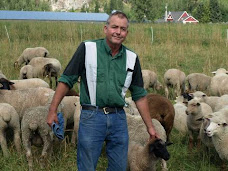
You may notice the dust mask on my face, well I suffer hay fever which isn't much fun if you are a grass farmer like me, which proves how dedicated I am and how much I love my occupation!!

Haymaking


Although I have been moaning about the cool spring the grass once it had started growing has done very well. The weather conditions though have made for some strange happenings. The grass bolted to seed and the alfalfa which normally should be cut when there is between 10% and 20% bloom hardly had a bud let alone a single bloom. So we cut the grass a bit late and the alfalfa a bit early making for a fair quality and good production. We made hay on 32 acres and put up approximately 70 tons of hay. This is not a bad yield as we use no fertilizer and the fields were grazed for the last two years. We will get a second cut and possibly a third it the weather is kind, if not a third cut we will graze it till winter, using it as "foggage" or stockpiled pasture.
Our neighbours did some custom work for us one cutting the hay and the other baling. I turned it and raked it prior to baling and latter hauled it home and stacked it in the barn.

My Pasture


The spring here was slow and cold so not only was the sheep pasture slow to get going and produce, my pasture was too.We have eaten lettuce, radish ,mint and chives so far but we should be eating far more by now. I think the vegetables are at least two or three weeks behind where they should be. This time last year we were eating mint with our own new potatoes, so we had to settle for mint with store bought Fraser Valley spuds which although they were tasty it just wasn't the same. These photos were taken a couple of weeks ago and at present it looks better with more growth and hopefully next week we can have some fresh peas and the odd strawberry. I almost forgot we also had rhubarb in a crisp fresh from the garden, a true prairie fruit and one of my favorites.

Friday, June 13, 2008

Too Much Grass, is such a thing possible for a grass farmer?


It's a worthy question , as we always want lots of grass can we in fact have too much? The true answer for a grass farmer would be never too much. But for a grazier like my self we can have too much at the wrong stage of growth. This is very noticeable this year as we do not have enough sheep to keep up with the spring flush of grass, much of it gets ahead of the sheep producing seed heads and loosing quality for grazing so we will have to pull these paddocks out of the grazing rotation and cut them for hay. The paddocks that the sheep have grazed and have produced seed heads have to be clipped after the sheep have grazed to remove the seed heads so as to encourage the plants to produce the more palatable green leaves we desire for grazing.
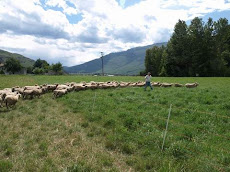
The bottom photo shows three stages, in the foreground is a paddock we have grazed and then clipped, note the brown clippings in rows, they will rot down and provide food for the grass so it is not wasted. On the far side by the line of trees is a paddock the sheep have grazed but needs to be clipped and to the front and right is the flock and they have just moved into a new "break".
The third photo shows some of our electrified mesh fence which is portable and can be easily rolled up and put up in a new paddock. We have 17 rolls so we can set up for a weeks grazing at a time and contrary to the sceptics it does not take long, about 3 hours for a weeks grazing. With a bigger flock and more moves per week the labour goes up but costed out on a per head basis the cost actually goes down with a bigger flock. Yes, we have more grass, now we need more sheep!
The first photo shows a paddock they have just finished note the lack of green leaves and clover in the lower part of the sward. Compare it to the second photo which shows them in the new "break" where there is lots of green leaves, this small area will do them for 2-3 days and then we will move them , clip the pasture and be back to graze it in 3 -4 weeks.

Saturday, June 7, 2008

The Pullpig Dining Car


Those train enthusiasts amongst you will notice the play on words as Pullman Dining Cars were the place to go on long train rides back in the day of more civilized travel. Our pigs I felt deserved no less and here it is in all its splendor complete with sun shade/rain shelter, feed trough and water bowl and every day or two it is pulled to a fresh pasture for a new salad bar to enjoy. The pigs love it and are growing rapidly, it seems they love dandelions and eat them first followed by clover, alfalfa and any other available broadleaved weeds and once they are all gone they will pick over the grass before rooting around for the dandelion roots. Twice a day they get a helping of grain and brewers mash and we feel we can feed them a third grain , third brewers mash and a third fresh salad. This should make for a low fat, flavourful animal that would sell well at the farm gate. At the moment this is an experiment and any spare brewers grain can be fed to the sheep, but if we can find a bigger market for pork we have no shortage of feed and it only takes me three hours to make another dining car. Any one for beer raised pasture pork? Leave your order in the comment box.

Three Little Pigs


A source of food secured (see previous post, scroll down one) we now had to get some weanling pigs, so off to the Stockyards to bid on some pigs . There were a good number to choose from the day we went but only three coloured ones all the rest were white. It has been my experience in the past that coloured pigs always do better out side than white ones especially if you wish to give them a more mixed diet than what is purchased from a feed mill. So I paid the top bid and picked the three coloured pigs and as the rest sold I was relived that they did not go for much less money than I had paid.


We put them in the back of our trusty old Volvo station wagon taking them home in style and placed them in a small pen adjacent to the barn. I kept them there for the first week while I planned and built a mobile pen to put them outside in. This allowed them time to settle down and get used to their new diet of grain and brewers mash. It has a distinct smell, not unpleasant but after a couple of days the pigs caught on and ate their new ration with gusto. We moved them out to the field to their new pen and they were so happy munching on weeds and grass with their little tails wagging like mad one wonders how a pig manages in a large barn in the many "hog factories" we see dotted around the country.

New Venture

As with many of our new ventures and adventures it started by my wife reading the classifieds in the local paper. I never read them as she makes a religious habit of doing so ever Wednesday and pointing out all the interesting deals and possible bargains for me to check out. On more than one occasion this has led to a new venture or change in plans to an existing one, or just a purchase of something that would look nice or be useful. I can't complain as we have a lovely set of old beams in our house and deck that she spotted one time, so when she told me the local brew pub was giving away 20,000lbs of spent brewers grain per year to any one who would pick it up, my mind and pencil began working.
Brewers grain are the left over grains after a brew mash has been made and it is a good source of feed for cows, sheep , goats , pigs and chickens. It is low in sugar and starch as that was used by the beer but is high in protein and is palatable to livestock. It can be used for 30% to 50% of a pigs ration and in these days of high grain prices it could make a money loosing pig into a profitable set of pork chops.
Here in our town it costs 3 cents a lb to dump garbage, so the pub is saving $600 a year and that would be triple or more with the cost of labour and transport as the dump is a six mile round trip. I had a chat with the manager and brew master at the pub and they were pleased that we could recycle the waste. But I reeled them in when I suggested they might wish to put a special on their menu of "beer" fed pork. How cool is that, eating pork chops that ate the grain that made the beer you are washing it down with. Aah the circle of life!!