Names, Labels and Trust
As a food producer I like to keep up on all the food stores and retail flyers to see how my products are sold and marketed. It’s fascinating to see how a few knife cuts, different packaging, name changes and labels along with a few hundred or even thousand miles alters the image of a farm product and thus its profit margin. Image sells, and it’s no more obvious than at produce isles with fruit and vegetables symmetrically stacked and all blemish free. We expect the best and we want a deal, and the store delivers. I have no problem with this except the way in which many of the products are marketed. Name brands carry a lot of weight in the food industry, so does image and lately labelling. I don’t mean the ingredient list, but how a product is named.
Eggs are the classic example. “Free Range” or “Free Run” implies they are free to roam about and with the aid of a barn yard picture of loose hens on the egg box, or a video of chickens loose in a field much like the Real Mayonnaise ad, people think these chickens are free outdoors. In virtually ever case it means they are free to run about in a barn, but they will never step outside, see the sun or scratch for worms. Legally it is correct, but with our tricky language and suggestive pictures the truth is twisted significantly.
On my way to Kelowna the other day I passed a truck with the logo Sunshine Eggs, and chuckled as the only thing that came close to sunshine with the eggs would be the yolks. But only if the chickens were running outside with access to greens and bugs, then the yolk would be a nice orange and not the usually washy pale yellow one expects from regular barn eggs.
In a recent flyer I saw a classic, “Fresh Farm Fed Chicken”. Do they feed them somewhere else normally, and these ones were different because they were fed on a farm? Worse yet, if they are fresh are the rest of the products stale? OK, I know I’m playing with the words, but so were the guys selling you the eggs in the previous paragraph. With all the slick wording and imagery it is easy to be duped into buying something that is not all together what it seems.
Even in the organic produce section things can get tricky. With main stream agriculture entering the organic market, there are many feedlots feeding organic grain and receiving certification as all the rules are met. Also thousand acre lettuce and greens fields are now common down south and it arrives with the same carbon foot print as the commercially grown produce. We end up having to trust slick labels and cute pictures. Is this how you really want to buy the most essential thing you purchase, and your health and life depend on? When buying a new car, stereo, TV, or house we are encouraged to be informed consumers, researching, comparing and asking lots of questions. Yet when we go down the food isle all that goes out the window, price is everything, because there is no way of comparing products as there is no information about where it was grown or how, and if it has labels they are confusing, inadequate, or avoid answering what you need to know. They do not have to say if it is genetically engineered or even if it has been irradiated. It seems if it didn’t kill us last week we can keep buying it, trouble is these effects add up over along time and are difficult to prove. You have to eat, so you have to trust its ok, but people are starting to question and want to know more. Movies like “Fast Food Nation” and “Food Inc” are helping to lift the veil on our food supply and expose the true social cost of our food.
The farmers and people need to reconnect, to build the trust that has been lost. It would be great if you knew the names of the farmers that grew your meat, eggs, milk and produce, and where they lived. If you could ask them questions about how they grow your food and what they think about the food industry. The answers they give would help you decide if they are trustworthy to grow the food for you and your family. Maybe ask if you could visit their farm and see for yourself, chances are if they have nothing to hide the answer will be yes. Farmers also need this communication as the direct feed back from their customers helps them to produce what you want.
How and where can this happen you ask. Start at the Farmers Market, chat to the farmers on their stands, get to know them and ask the questions you wish answered. Learn about their products and why they are better for you and your family. Locally bought and consumed lowers the social costs of food and all the milage associated with most supermarket food.
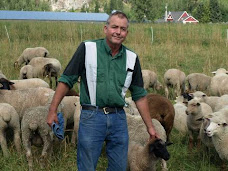
Starting on the May long weekend I will be attending Salmon Arm Friday morning Farmers Market with our farm “Harmonious Homestead and Ewe”.
Come over and chew the fat about food, farming and feeding families, I’d love to meet you and tell you about us, and get to reconnect my gate to your plate.
Thursday, June 3, 2010


Old Ways, New Learning Curve,
Going Organic On The Farm.
With the recent visit of Percy Schmeiser and the movie ‘Food Inc’ many consumers are thinking about GM (Genetically Modified) food and food products in the things they eat. The truly annoying and scary thing is that there is no labelling so folks don’t know what they are eating; is it GM or not GM? There is a way to avoid the GM conundrum though. Organically certified foods are GM free as no GM crops are allowed in the certification rules for farmers. With this in mind I was interested when I heard of a local Dairy farmer who was converting to Organic. In Canada most organic dairy producers have smaller scale operations, and many make cheese, yogurt and bottle milk much like Gort’s Gouda here in Salmon Arm. They produce and market their product, which is a major undertaking and keeps them very busy, as milking is a year round, 24/7 occupation. So you can imagine, not a decision to take lightly.
The McLeods, Ken and son Jack farm next to Foothill Rd under Mount Ida and milk 125 cows which make’s them mid sized dairy farmers. As I sat at their kitchen table I learned of the changes and challenges of their new venture into Organic Farming. It takes three years to transition into Organic certification from regular farming, and Ken and Jack are well on the way with two years under their belts and one more to go. This ensures any chemical and artificial fertilizer residues are out of the soil and the animal’s environment, so as to avoid any contamination. During that time all organic rules are observed, use of organic seed and feed, only recognised cleaners and medications may be used. This means cost of production is increased while the price of the end product does not, the organic price premium does not come till the three years are completed.
The corn grown for silage is a major part of the cows ration and is now organic seed. It is planted later to ensure the maximum amount of weed seeds germinate so they can be cultivated under thus giving less competition to the corn. Ken and Jack were pleased with the yield as there was less of a drop than they had expected with the shorter growing time.
Timing as they are discovering is everything and attention to details very important. Making a mistake in regular farming can be cured with a spray or medication, but with organic management, prevention rather than cure is the goal. Ken and Jack realise they are now using knowledge that their father/grandfather used and wish they had more farming books of the 1930s 40s and 50s with tips and remedies to help them in their management practices. So you can see, it’s not just plastic and cans that get recycled.
Besides growing organic forages and sourcing organic grain for feed, bedding for the cows and calves also has to be organic. The milking cows lie on sand in individual stalls known as free stalls. This is actually very comfortable and during my visit most of the herd were comfortably snoozing and ‘cudding’ before afternoon milking. The cows that were soon to calve and the young calves were bedded with organic spelt straw; this is a kind of grain and was grown in Armstrong.
Probably the biggest change and by far the toughest learning curve will be adapting to summer grazing the milking herd while maintaining production. The organic rules insist that all stock receive four months grazing. Most all of the dairy herds in Canada never graze, you may see them out in an exercise area for a leg stretch, but never to earn their keep grazing, all are fed at a feed bunk. The McLeods need 70 acres of pasture and this was a worry until the neighbour, Ken’s brother John, agreed to rent them his land and buildings. Now you can see new fencing in fields adjacent to the road and next year there will be the photo opportunity of contented cows grazing and snoozing in the fields, making for a truly pastoral scene. This will require a new skill, that of rotational grazing one which Ken and Jack are keen to learn. The obvious advantage is healthier animals but also money saved as the animals harvest the crop and feed themselves, meaning a third less hay and silage making for the McLeod’s. In turn this means a smaller carbon footprint on the milk as less fuel is used to produce it. A win-win for everyone and the environment.
Once they are fully organic the milk will be handled separately to keep its organic status. The milk will be picked up by a truck that only handles organic milk, and will be added to milk from another organic producer from Mara, then sent to the coast for processing. It would be nice to see it stay here and be made into cheese, yogurt and fresh bottled milk, but Ken and Jack say they have enough on their plate for the moment. (Of course if you would like to start a dairy and process their milk I am sure they would be glad to talk to you.)
The big question I had to ask was why go organic? Especially with all this extra expense and three year transition period along with a mountain of stress and paper work. There was silence around the table, then some smiles and nods of heads. The main reason they both explained was they had come to a point when they realised there had to be a better way. All the expensive chemical inputs and fertilizers, none of which Ken’s father and grandfather had used and they farmed just fine. They were tired of the ‘agribusiness’ way and were wanting to do the right thing. With modern trends and consumer thinking they feel happy they have made the choice to go organic. With their obvious dedication, determination and enthusiasm I have no doubts they will reach their goals and I look forward to talking to them when they are fully certified.
Robot Milker’s, Star Wars on the Farm.
Those of us who went to school in the 60s and 70s may well remember being told how grand life would be when we were older. Robots were to do most of the work and we would only work 3 or 4 days a week, our biggest job was going to be what to do with all the spare time. Yeah, right! Now we have less sleep and work more hours than we did 30 years ago and are lucky if we find time to put our feet up for a quick nap let alone pursue enjoyable pastimes and hobbies. The only robots I see are us being turned into them.
Then the other day over coffee I learnt that our neighbour Brad May who dairy farms down the road had installed a Robot milker in his barn and was now living the good life watching his clock turn 6.00am while still lying in his bed. This I had to see and so made an appointment to see this marvellous mechanical beast. “Come any time” Brad said as its always working.
Brad has a new barn for his operation and work crews are still there doing the finishing touches. The cows though have moved into their palace already and look happy and contented. It is a spacious, airy, light easy to clean barn and is bird proof so there are no pigeons (winged rats!) and no droppings to dodge! The robot milker is actually a stall at the end of the barn which cows can walk in to when ever they feel like it. While they are milked they receive a measured amount of grain which is controlled by a computer in the office. It reads the chip in the cow’s number tag around her neck, so it does not under or over feed her. The cows can go in as often as they like but are only milked 3 times a day with milking’s no closer than 4 hours apart .The stall is actually one wall of the milking parlour and the robot is on the parlour side of the stall. The robot is a large sensitive arm much like the mechanical welders in car factories. They have been around for 20 years but with all the bugs ironed out of them they are now gaining popularity with farmers building new barns and parlours. The cow’s teats are washed first with the aid of a laser eye which guides the arm. A suction cup with circulating water is placed on each teat to wash and dry it. Then four separate milk cups are put one on each teat. The udder has four quarters and they each milk at different speeds. The robot senses when each one is finished and then removes it leaving the others milking until they are finished. This eliminates the damage done by over milking that can happen with regular machines where all four quarters are milked at the same time, all on all off so to speak. The milk is held in a receiving jar and is pumped to a refrigerated holding tank where it is kept till the milk truck picks it up to haul it to the dairy. The computer tallies each cows milk yield daily which aids and simplifies the management of the herd.
Brad tells me the cows adapted to the new system quickly and only one or two of the old girls need help to use it. Like some of us older ones, they don’t do change! Many of the cows go to be milked in the middle of the night while Brad is asleep and because they are happy their milk yields are improving and Brad is happier with a more normal lifestyle. It means he has more time for his young family and for his other job, coaching a hockey team. He thinks the robot will pay for itself in 10 years, so as you see, they don’t come cheap. They also work all day without complaining, don’t need holidays, and don’t show up hung over! Brad grows all the herds feed on the farm and this means that the robot allows him to stay in the field to complete the job instead of stopping for milking half way through the afternoon. Sounds like a win- win to me.
Now for a little secret, Brads milking parlour is the only one I know of with a chesterfield in it so you can get comfortable while watching the work at hand. What a photo op. Brad watching hockey on the TV, supping beer lounging on the sofa while the cows are being milked. “No way” said Brad. “I would never live it down; folks would get the wrong impression and think we were all lazy out here.” Well Brad I could see you are not lazy and many of us are green with envy as you have found a way out of farming’s biggest “chore”. All the best with your robot, and as you farm in the city it’s good to see you living a more normal time table. I wonder if they make those robots ‘goat’ sized as I will soon have milking chores to do.
Good News.
For those of you who follow this column I have good news following our vet’s pregnancy check visit. Charles did his stuff! All the goats are bred. The rams did a good job too as all the ewes are bred with the exception of two old girls, which was no surprise as they remember the first George Bush presidency! So we are shearing in the first week in March and then its full steam ahead to April lambing.
Monday, March 22, 2010
Baby Rabbits


 We had our rabbits early as we wanted them weaned for Easter when we open up the farm. Two does obliged but the other Mopsie would not breed and so is about 2 weeks later. The top photo shows Mopsie's nest. We think there are 6 or more "kits " under the hair which the doe's pluck of their bellies to line the nest and keep their young warm.
They are born bald and blind but in 10 days have hair and by 2 weeks their eyes open . At that time they are warm and all the hair is tossed aside as shown in bottom two photos. Turns out the does only suckle once a day but look how fat those little bunnies are. Rabbits milk is 3 times richer than cows milk. At the time of writing the little ones are just starting to come out of the nest and explore their pen.
The latest thing, it must be from Europe.


 Yes you are seeing what you think you are! My wife taking our rescued rabbit Mr Whiskers for a walk. He showed up around Christmas time looking for groceries and judging by how friendly he was we felt sure he had been dumped as an unwanted pet.One of the hazards of living 5 miles from the concrete jungle. So to earn his keep we thought we would let kids take him for a walk on a cat lead during our open days. So Clare said she would train him ( just as well , you wouldnt catch me doing it) and he loves it. He likes to check out the sheep in the corrals and even the cats don't bother him as he likes to chase them.
Shearing done but Lambing starts in 12 days


In the photo above you can see in the back ground I have been busy putting up the lambing "jugs" in the maternity ward. The girls are now "Bagging up" and looking rather wide. With our open days starting Easter weekend I have also made some people friendly "jugs" in the yard with easy access for children to say high and pet new born lambs.
We sheared the ewes back at the begining of March. The top three photos shows the crew , Clare skirting the fleece, and Rod shearing. Rod our shearer did a fine job and with less to do this year it was a pleasant days work and a good visit. His wife came along and went to shearing school the next week so may be next year we will be done twice as quick!
Saturday, February 6, 2010
Same Day, Different Year

24th January 2009 Approx 2 - 3 feet of snow, a normal winter.

24th January 2010 So you still dont believe this Climate Change thing?
Subscribe to:
Posts (Atom)